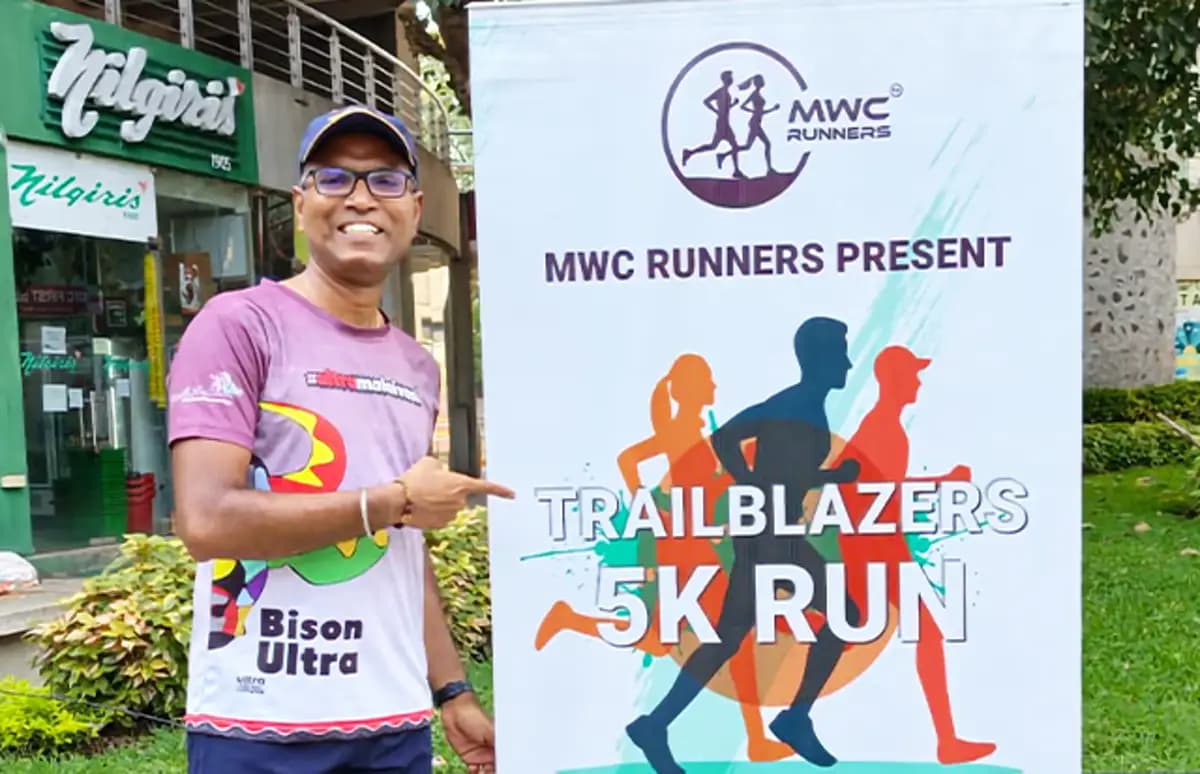
Ashok S · Treasurer
The Cost of Lightness
Why nutrition and strength trump weight loss in running
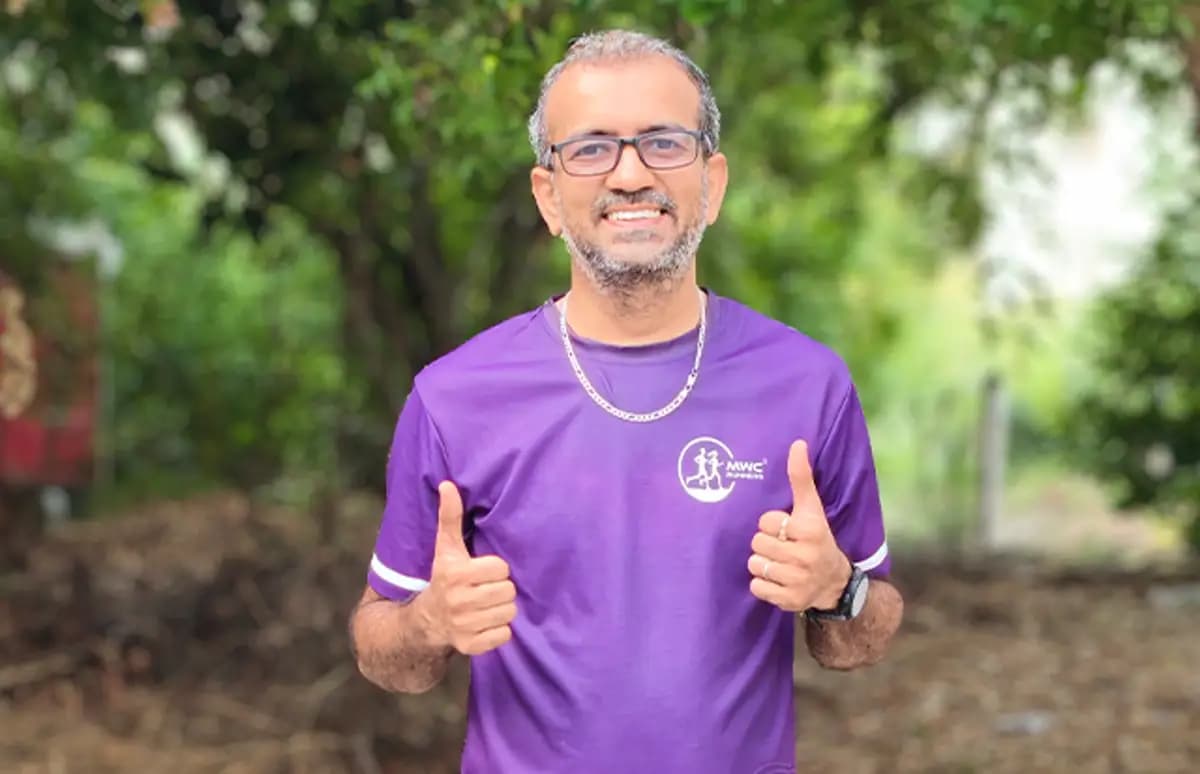
“Running clubs are more than training groups — they are families that carry you when your own legs cannot. Every comeback story needs a community, and mine was powered by theirs.”
— Ashok S
MWC RUNNERS CLUB | MEMBER INSIGHTS
The Cost of Lightness
Why Nutrition and Strength Trump Weight Loss in Running
A Member Spotlight on Ashok
Every runner eventually meets the same hard truth: the body does not negotiate with ambition. For Ashok, that truth arrived in the form of a fractured tibia, mid-race, mid-marathon, at the exact moment the illusion of lightness he had chased finally shattered. This is his story of breaking down and rebuilding, not just as a runner, but as someone who finally learned to work with his body instead of against it.
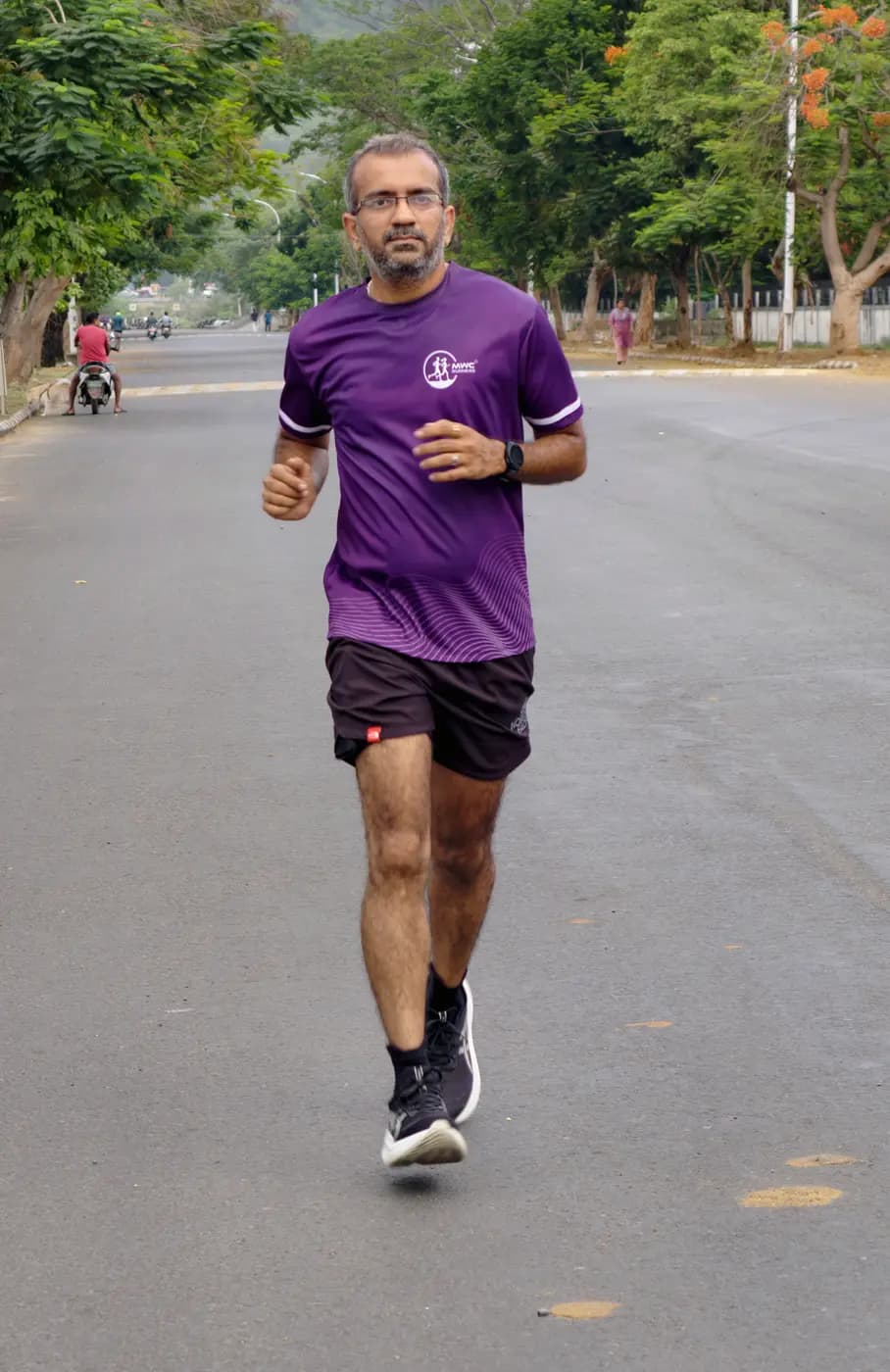
THE RECKLESS BEGINNING
When the pandemic hit in 2020, running became Ashok's escape. With no structured training and little guidance, he signed up for a half marathon and crossed the line in 2 hours 40 minutes. It felt like the start of something powerful, and it was, though not in the way he expected.
That finish line became what he now calls a gateway drug. Longer distances followed in quick succession: 32 km training runs, multiple marathons, and eventually the demanding Ooty Ultra 60 km. His lungs felt limitless, his ambition felt unstoppable. But beneath the surface, his bones were quietly crumbling under a load his body was never given the resources to handle.
THE FATAL MISTAKE: CHASING SPEED THROUGH WEIGHT LOSS
Like many runners chasing a personal best, Ashok fell for one of the sport's most persistent myths: that lighter automatically means faster. Ahead of the Hyderabad Marathon 2024, he slashed 6 kg in just 10 days, living on juices and semi-solid dinners in pursuit of a faster finish.
The cost was steep. His bones were starved of calcium, vitamin D3, and protein, the very nutrients responsible for bone remodeling and repair. Energy that should have gone toward keeping his skeletal system strong simply wasn't there. During the race, under the relentless pounding of the marathon distance, his tibia fractured. The illusion of lightness had shattered, quite literally.
LESSONS FROM THE BREAK
Nine months of forced rest is a long time for any runner, and Ashok used it to absorb truths that he now believes every runner should engrave into their training philosophy:
- Nutrition first: mileage means nothing if your body cannot repair itself.
- Weight is not speed: dropping weight without structural strength is a shortcut to brittle bones.
- Ambition can destroy: willpower alone can push you through ultras, but biology always wins.
- Recovery is training: rest days are when bones and muscles actually adapt.
- Energy availability matters: low energy availability weakens bones, hormones, and immunity.
BUILDING NEUROMUSCULAR ARMOR
Recovery, Ashok realised, demanded more than simply resting. He rebuilt his body with a dual focus: heavy lifting for structural strength, and dynamic drills for shock absorption.
- Quadriceps strengthening: the foundation of knee stability and impact absorption.
- Barbell squats and front squats to build knee stability and absorb impact.
- Bulgarian split squats to strengthen each leg independently and prevent imbalances.
- Leg extensions for isolating the quadriceps and reinforcing patellar support.
- Calf strengthening: built for both power and endurance.
- Standing calf raises for the gastrocnemius, powering push-off.
- Seated calf raises for the soleus, supporting endurance in long runs.
- Single-leg calf raises to mimic running mechanics and improve balance.
- Tibialis and shin conditioning: tibialis raises to fortify the shin and protect the tibia from stress fractures.
- Glute and hip stability: deadlifts, hip thrusts, and lateral band walks to stabilise the pelvis and prevent knee collapse.
- Running dynamics: agility ladder drills, plyometrics, and depth drops to stiffen tendons and train safe landings.
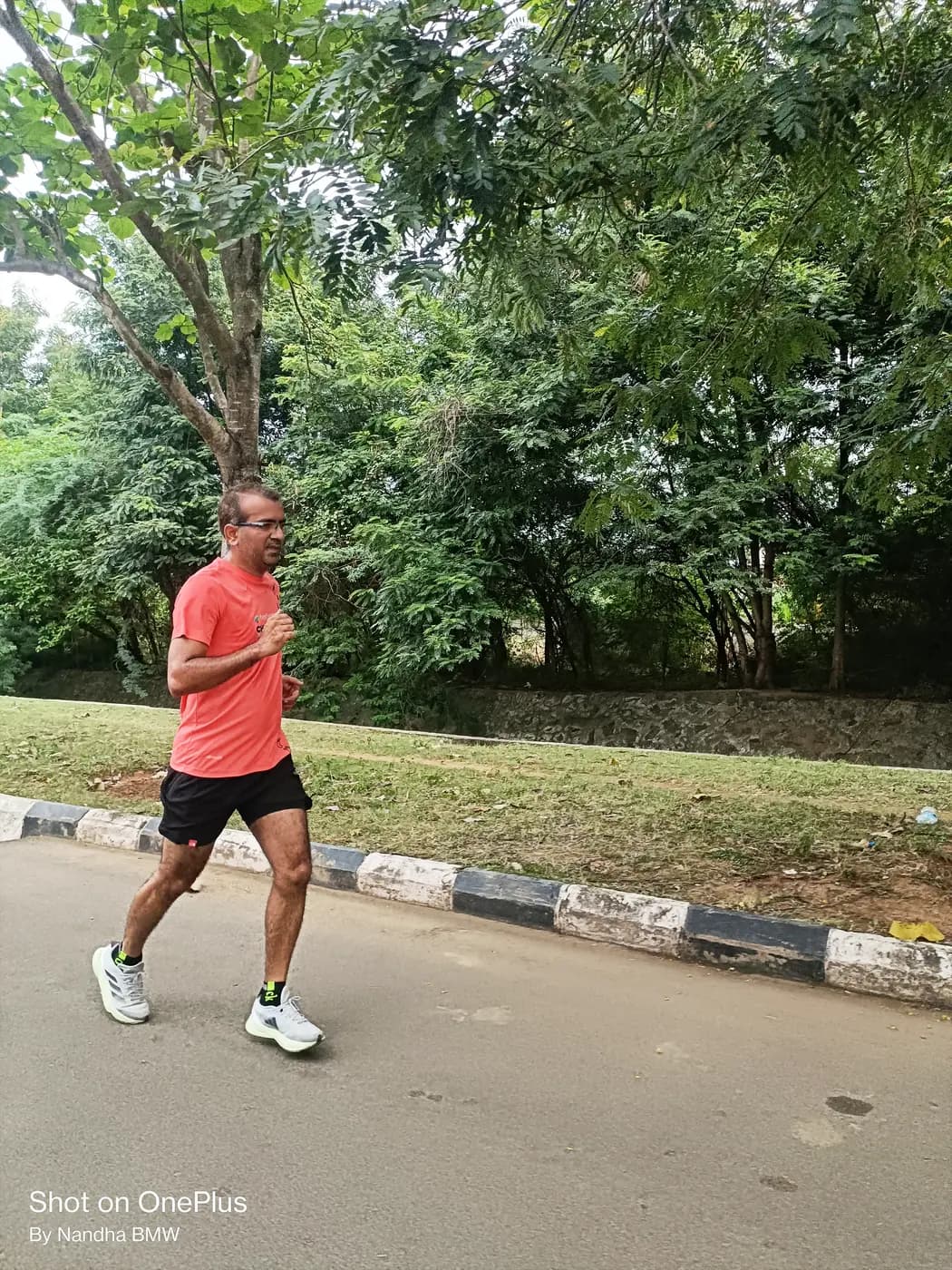
Together, this training built what Ashok describes as a muscular shield, one capable of absorbing roughly 80 percent of impact before it ever reached bone.
THE PSYCHOLOGICAL BATTLE OF RETURN
Returning to running after nine months away was, in Ashok's words, terrifying. Every step carried the ghost of the pain that had ended his season so abruptly. To manage that fear, he set himself strict, non-negotiable rules:
- Progressive loading: gradual mileage increases, never sudden jumps.
- Solid nutrition: nutrient-dense meals became non-negotiable, not optional.
- Mandatory strength work: the weight room became as important as the track.
- Shoe mileage tracking: replacing shoes every 1,000 to 1,200 km.
- Mental resilience: accepting fear as part of recovery, not as a barrier to it.
TRAINING THAT REMODELED ME
Beyond strength work and nutrition, Ashok credits a set of specific running practices for helping him rebuild safely and effectively:
- Progressive runs: starting slow and finishing faster taught controlled adaptation.
- Interval runs: short bursts of speed alternated with recovery improved cardiovascular capacity without overloading his bones.
- Slow long runs: running at a deliberately slower pace built endurance while minimising skeletal strain.
- Strength integration: combining gym work with running created a balance between muscular armor and endurance.
THE POWER OF COMMUNITY: MWC RUNNERS CLUB
Recovery, Ashok is quick to point out, is never a solo journey. While nutrition, strength training, and patience rebuilt his body, it was the unwavering support of his friends from MWC Runners Club that rebuilt his spirit.
Through nine months of silence, sidelined from the sport he loved, the club stood by him. They kept motivating him, kept reminding him that setbacks are temporary, and kept feeding him positivity whenever doubt crept in.
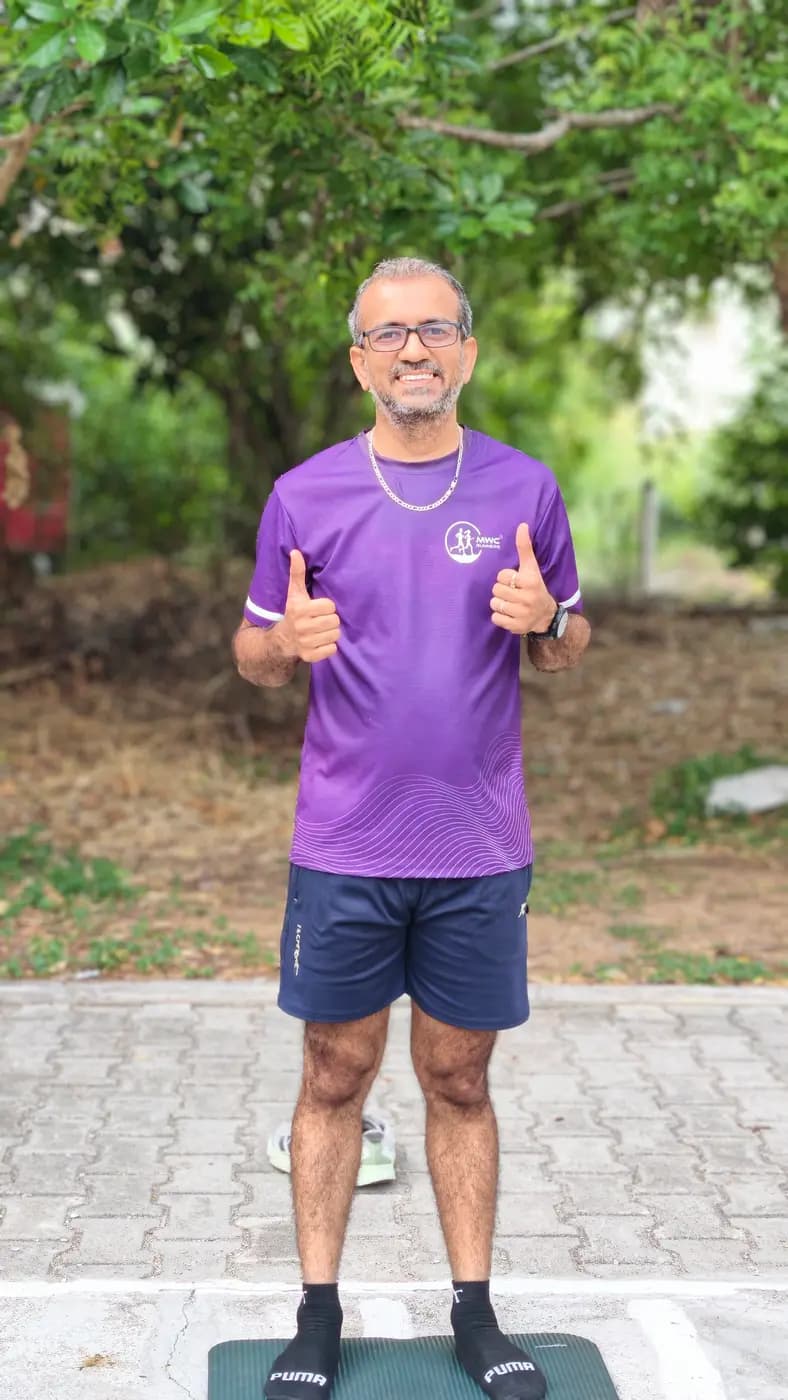
"Running clubs are more than training groups, they are families that carry you when your own legs cannot. The encouragement I received from MWC was the invisible fuel that kept me disciplined and hopeful. Every comeback story needs a community, and mine was powered by theirs."
— Ashok
CLOSING REFLECTION
Ashok's reckless pursuit of speed nearly ended his running journey before it truly began. Today, he runs differently, not to outrun biology, but to work with it. Speed and distance, he has learned, mean nothing if you cannot stand at the starting line in the first place.
The illusion of lightness is seductive. But true resilience, Ashok's story reminds us, lies in strength, nutrition, patience, and the positivity of those who stand beside you.
MWC RUNNERS CLUB
Run Smarter, Run Together